
Why Dust Is a Big Problem in Gold Canyon Homes?


If you live in Gold Canyon, you know the routine. You clean on Monday morning, feel proud for about three hours, and by sunset there is already a thin grey film back on your coffee table. It almost feels personal. While all of Arizona deals with desert dust, Gold Canyon seems to get an upgraded subscription.
The reason is not bad luck or lazy housekeeping. It is geography, soil chemistry, wind patterns, and how our homes breathe. Once you understand what is really going on, you can finally stop fighting blind and start winning smart.
The Mountain Effect Nobody Talks About
Gold Canyon sits right at the base of the Superstition Mountains. Beautiful? Absolutely. Dust-friendly? Also yes.
When strong desert winds move across open land, they carry fine particles with them. The mountains act like a wall. Instead of wind simply passing through, air currents swirl and slow down near our neighborhoods. Slower wind means more settling. And guess where it settles? Your patio. Your roof. Your windowsills. Your living room!
In other words, while other cities get a quick dust drive-by, Gold Canyon sometimes gets the full delivery service.
Our Soil Is Extra Fine and Extra Persistent
Not all dust is equal. Gold Canyon soil contains high levels of caliche and ultra-fine mineral particles. These particles are smaller and more abrasive than ordinary sandy grit, which is one reason homeowners here constantly look for better ways to improve your indoor air quality and breathe easy at home.
When humidity rises slightly during monsoon season, or even from your cooling system, caliche can become mildly tacky. That means dust does not just sit politely on surfaces. It clings. It bonds. It settles into textured paint, window seals, and ceiling fan edges.
This is also why proper filtration and ventilation matter so much in this area. Fine particles stay airborne longer, circulate through vents, and settle again if air systems are not well maintained.
And yes, this is why wiping a fan blade here feels different from wiping one in a humid climate. In Gold Canyon, the dust behaves like it signed a long-term lease.
Your House Might Be Inhaling Dust
Here is the part most cleaning advice skips. Your home may actually be pulling dust inside.
When you turn on a kitchen hood or bathroom fan, air gets pushed out. If your house is not perfectly sealed, outside air gets sucked in to replace it. This is called negative pressure, but we can just call it what it feels like: your house acting like a giant vacuum.
Dust slips in through:
Gaps under doors
Worn weather stripping
Attic hatches
Recessed lights
Electrical outlets
The door between garage and house
You might be vacuuming the floor while the house is quietly inhaling more desert air from above and around you. Not ideal.
The Swamp Cooler Situation
If you use evaporative cooling, this part is important.
Swamp coolers pull outside air directly into your home. They are great in dry heat. During a dust storm, they become enthusiastic dust distributors.
If you see a brown wall rolling in from the mountains, switch it off immediately. Do not wait until you smell it. By then, your sofa has already met the desert.
Why Dust Feels Endless Here
Gold Canyon has several built-in dust boosters:
Open desert land with loose soil
Construction and new development
Dry air that keeps particles floating longer
Wind patterns that slow and drop dust near homes
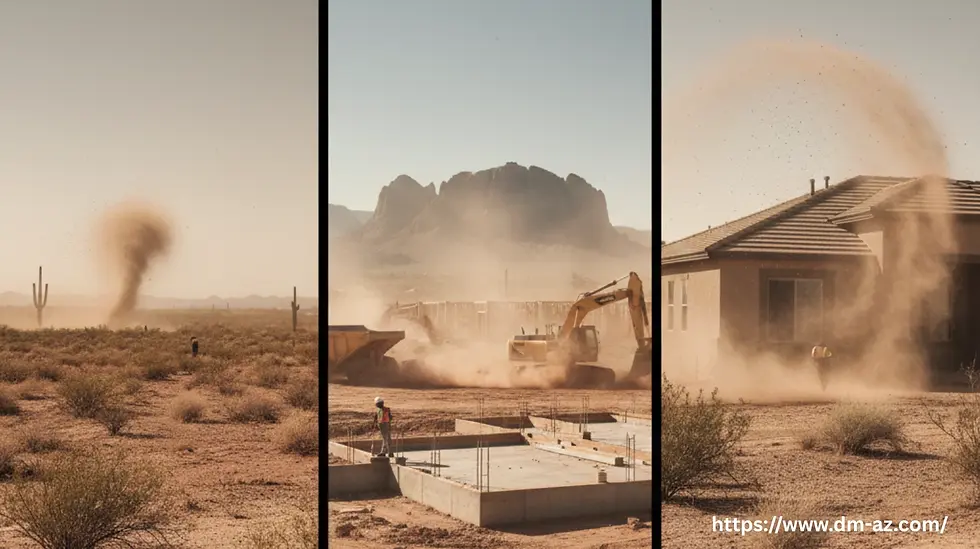
Unlike cities with heavy pavement and dense landscaping, we have more exposed ground. That means more material available to become airborne. So if you ever wondered why your house feels dusty even on a calm day, now you know. The supply chain never shuts down.
Where It Builds Up First
Dust leaves clues. In Gold Canyon homes, it often collects in:
Window tracks
Baseboards
Ceiling fans
Air return vents
Blinds
Entryways
Garage shelves
If window tracks fill quickly, sealing needs attention. If vents look dusty constantly, filtration may need upgrading. Dust patterns tell a story. You just have to read them.
The Health Side We Cannot Ignore
Fine desert dust can irritate lungs and airways. People with asthma or allergies often notice symptoms flare during windy days. Much of this irritation comes from extremely small particles that are easy to inhale without realising it.
The U.S. Environmental Protection Agency explains that particulate matter, especially PM2.5 and PM10, can penetrate deep into the lungs and affect both respiratory and cardiovascular health. That means the dust floating through your home is not just surface debris. It is something your body responds to.
In Pinal County, Valley fever is also a known concern because fungal spores live naturally in desert soil. Wind and soil disturbance increase airborne exposure. That does not mean panic. It means prevention matters.
Dust is not only about how your home looks. It is about how it feels to breathe inside it.
Why Regular Cleaning Is Not Enough
If you are dry dusting with a feather duster, you are mostly redecorating the air.
Desert dust in Gold Canyon is extremely fine. It lifts easily, floats longer than you expect, and settles again within hours. That is why technique matters. And when the buildup has been sitting for months, simple surface cleaning is not enough.
That is where deep house cleaning makes the real difference, because it targets the hidden layers ordinary cleaning misses.
Here is the correct order:
Dust high surfaces first using slightly damp microfiber cloths.
Wipe vertical surfaces next, including doors and cabinet fronts.
Clean window tracks carefully, not just the visible ledges.
Vacuum thoroughly with a sealed system that traps fine particles.
Mop floors last to capture anything that settled during the process.
During a proper deep house cleaning, this same method goes further by addressing vents, baseboards, ceiling fans, light fixtures, and other overlooked areas where desert silt quietly builds up over time.
Dry sweeping and aggressive brushing usually just give the dust a second tour of your living room.
The Gold Canyon Dust Control Plan
Winning here requires layers. Let's discuss about them one by one-
Seal the Envelope
Check door sweeps. Replace cracked weather stripping. Seal visible gaps. Even small openings matter more than you think.
Upgrade Filtration
Use high quality pleated HVAC filters and change them more often during monsoon season. Consider adding a HEPA air purifier in bedrooms or main living areas. Think of it as giving your lungs a quiet assistant.
Manage Humidity
Keeping indoor humidity balanced can reduce static and limit how aggressively dust sticks. Too dry and particles float longer. Too humid and caliche clings harder. Aim for balance, not extremes.
Landscape Wisely
Bare soil around the home increases airborne dust. Gravel, desert friendly plants, and stabilized ground surfaces help reduce what gets lifted in the first place.
After a Dust Storm
Close everything. Turn off swamp coolers. Wait for outdoor air quality to improve before deep cleaning. Replace filters if needed. And maybe reward yourself for surviving another haboob.
When to Bring in Professionals
If your home feels dusty within hours of cleaning, or if your filters clog unusually fast, it may be time for deeper intervention. Duct inspections, professional deep cleaning, and proper sealing can dramatically reduce the cycle instead of just masking the symptoms.
At Distinguished Manor, we provide professional cleaning services right here in Gold Canyon, AZ, and we see this pattern every week. Homes that invest in proper sealing and filtration, combined with structured deep cleaning, experience a noticeable shift. Dust does not disappear overnight, but it becomes manageable instead of overwhelming.
When sealing gaps, upgrading filters, and applying the right cleaning method all work together, clients often tell us the same thing: their home finally feels lighter, fresher, and easier to maintain. In Gold Canyon, that is not a luxury. It is a smart strategy.
Final Words
Living in the shadow of the Superstitions is a privilege. The views are breathtaking, the sunsets are unmatched, and the desert has a certain calm beauty. But that beauty comes with fine print. Gold Canyon dust is persistent because of geography, soil, wind, and airflow.
The good news is that you are not powerless. With smarter sealing, stronger filtration, and the right cleaning strategy, you can turn your home into a true indoor oasis. The desert can stay stunning outside. Your air can stay clean inside.


Comments