
How to Clean Oven Mitts in 2026
- Tiffany Buckley

- Dec 23, 2025
- 4 min read

Oven mitts protect your hands from serious burns, yet they’re one of the most overlooked items in the kitchen. They grab hot pans, greasy trays, smoky grills- and then get tossed aside without a second thought. Over time, that buildup of oil, food residue, and moisture doesn’t just smell bad; it can affect hygiene and even safety.
The challenge is that oven mitts aren’t all made the same. Fabric, silicone, and heavy-duty heat-resistant gloves each need different care. This guide shows you how to clean oven mitts properly, remove grease and odors, and know when it’s safer to replace them, without damaging their heat protection.
Why Cleaning Oven Mitts Actually Matters
Dirty oven mitts are more than a cosmetic issue. Kitchen textiles regularly come into contact with handles, trays, and surfaces that may carry food residue. When mitts stay damp or greasy, they can trap odors and, in some cases, contribute to cross-contamination in the kitchen.
There’s also a safety angle most people miss. Grease doesn’t just stain, it changes how materials behave near heat. When oil builds up on oven mitts, it can stiffen fabric and reduce grip, increasing risk near open flames. The same type of grease buildup causes problems across the kitchen, which is why knowing four ways to clean grease off your stove can help you reduce fire risk on multiple surfaces, not just cookware.
First Step: Identify What Your Oven Mitt Is Made Of
Before washing anything, check the care label or material. This single step prevents most damage.
Most oven mitts fall into one of these groups:
Fabric or quilted cotton mitts
Silicone mitts (fully silicone or silicone-coated fabric)
Heavy-duty BBQ or heat-resistant gloves made with aramid or similar fibers
If there’s no label, treat the mitt gently and avoid high heat or harsh chemicals.
How to Clean Fabric Oven Mitts
Fabric mitts are common and usually the easiest to clean, but they absorb grease quickly.
Shake out crumbs first. If there are greasy spots, rub a little dish soap directly into the stain, dish soap breaks down oil better than laundry detergent alone. If the label allows machine washing, use a gentle cycle with warm water. Avoid overloading the washer so the mitts rinse thoroughly.
Air drying is safest. If the label permits a dryer, use low heat only. High heat can shrink fabric, harden padding, or weaken insulation over time.
For strong odors or heavy grease, soak the mitts in warm water with dish soap or baking soda for an hour before washing. If the smell still lingers after two proper washes, the insulation may be saturated and no longer safe.
How to Clean Silicone Oven Mitts
Silicone oven mitts don’t absorb liquid, but grease easily clings to their textured surfaces, especially around ridges and seams. This buildup often goes unnoticed until the mitt starts to feel sticky or smells off. The same thing happens on other non-porous kitchen surfaces when grease isn’t rinsed away properly. If you’ve dealt with stubborn residue before, our guide on how to clean a granite composite sink explains why grease behaves this way and why thorough rinsing makes such a big difference.
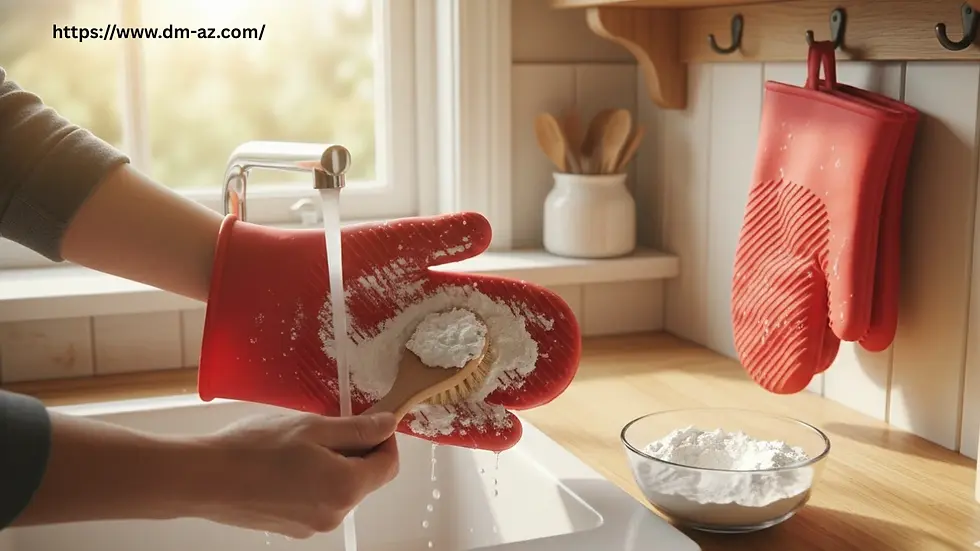
Wash silicone mitts with warm water and dish soap, scrubbing all textured areas carefully. Rinse very well- leftover soap is one of the main reasons silicone develops a tacky feel after cleaning.
Some silicone mitts are dishwasher-safe, while others are not. Always follow the manufacturer’s instructions. If dishwasher use is allowed, place them on the top rack so water can drain freely and residue doesn’t collect inside.
To remove food odors like garlic or smoke, scrub with a baking soda paste, rinse thoroughly, and let the mitts air dry completely before using or storing them.
Cleaning Heavy-Duty BBQ or Heat-Resistant Mitts
BBQ and professional heat-resistant gloves require extra care because grease can interfere with heat protection.
Follow the care label closely. Most should be washed gently and air dried away from direct heat. Never dry them on radiators, grills, or high dryer settings, excess heat can degrade protective fibers.

If these mitts feel oily or stiff, soak them longer in warm water with grease-cutting dish soap, rinse thoroughly, and repeat if needed.
The Safety Rule Most People Ignore: Never Use a Damp Mitt
A damp oven mitt is especially dangerous because moisture transfers heat far more quickly than dry fabric. Burn-prevention guidance from the American Burn Association explains that steam and scald burns can occur almost instantly and often cause deeper injuries than dry heat alone. This is why oven mitts should always be completely dry before handling hot cookware or oven trays.
Common Problems and Simple Fixes
Greasy feel → Wash with dish soap, not just detergent
Burnt or smoky smell → Pre-soak with baking soda, then wash
Sticky silicone → Rinse better; soap residue is the cause
Moldy smell → Wash immediately and air dry fully
How Often Should You Wash Oven Mitts?
There’s no strict rule, but these guidelines work well:
Heavy cooking or BBQ: every 1–2 weeks
Regular home cooking: about once a month
After raw food splashes or heavy grease: immediately
If a mitt smells or feels oily, it’s overdue regardless of schedule.
When It’s Time to Replace Oven Mitts
Cleaning can’t fix everything. Replace your oven mitts if you notice thinning insulation, holes, cracked silicone, lining separation, or heat “hot spots” where warmth passes through too quickly. Safety should always come before saving money.
Simple Habits That Keep Oven Mitts Cleaner Longer
Let mitts air out after use instead of stuffing them in a drawer. Avoid grabbing greasy handles when possible. Store them in a dry, ventilated spot, and never leave them near active heat sources.
Final Words
Cleaning oven mitts isn’t about perfection, it’s about safety, hygiene, and comfort. When you match the cleaning method to the material and keep mitts dry and grease-free, they last longer and protect better. A clean oven mitt grips more securely, insulates more reliably, and keeps your hands safe where it matters most. A few small habits now can prevent burns, odors, and unnecessary replacements later.




Comments